Duplexer vs Diplexer: What's the Difference?
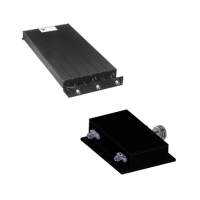
A duplexer and diplexer are often confused, but they offer distinct benefits and have key differences. Below helps explain what duplexers and diplexers are, their benefits and key differences.
A duplexer is a passive filter that allows bi-directional communication over a single antenna on a duplex radio communication system. It accomplishes this with low insertion loss while isolating the receive signal path from interference caused by the transmitter.
A diplexer is a 3-port device used in multiband systems which enables sharing a common antenna between two distinct frequency bands where each band encompasses both transmit and receive. This differs from a duplexer which combines the uplink and downlink portions of a single band.
Put simply, a duplexer separates a transmit and receive path based on signal direction and can be used for same frequency signals. On the other hand, a diplexer instead separates signals based on frequency with filters.
