What is an RF Isolator?
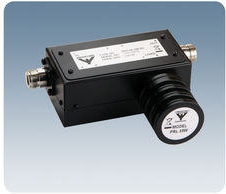
An RF isolator is a two-way passive device that transmits a signal in one direction whilst providing isolation against any reflected signal travelling in the opposite direction. As a result, it products sensitive components like transmitters and power amplifiers from damage caused by signal reflections. Single isolators are fitted as standard on PROCOM hybrid combiners (Dual Isolators Optional) and dual isolators are fitted as standard on cavity combiners.
How do they work?
RF isolators operate using a unidirectional flow, meaning signals entering port 1 can pass through port 2 with very little insertion loss. Any signals entering in reverse from port 2 are directed into a built-in matched internal termination and dissipated as heat. Inside the device, ferrite materials and permanent magnets create a non-reciprocal magnetic field rotation that dictates the direction of the wave.
What to consider when selecting an RF Isolator
• Isolation (dB): The level of isolation from the output port to the input port, measuring how effectively reserve signals are blocked.
• Insertion Loss (dB): The signal loss from port 1 to port 2. This should ideally be low and is usually between 0.2dB and 1.0dB.
• Power (W): The power level the isolator can handle while maintaining its electrical characteristics and not overheating.
• Frequency range
Where are RF Isolators used?
As mentioned, isolators are commonly used in hybrid and cavity combining systems. In addition, the use of combiners in several industries helps in maintaining reliable communication. They are especially useful in
TETRA combining systems where multiple transmitters share infrastructure and useful in radio infrastructure in
public safety environments where reliability and signal management are crucial.
