
What is a Low Noise Amplifier?
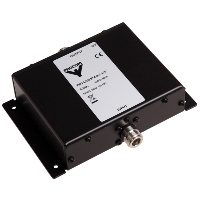 The overall purpose of a Low Noise Amplifier (LNA) is to maintain a good Signal to Noise Ratio (SNR) and therefore ensure that the received signal is large enough to be read by the receiver. Put simply, it's an electrical circuit that boosts a very weak signal while adding as little background noise as possible in order to protect the SNR.
They are most commonly placed right next to the antenna to capture signals before cable loss weakens them further, or mounted on a rack. In addition, they are commonly used in wireless communications, satellite systems and science & medicine in things such as radio telescopes and MRI machines.
Mast mounted
The overall purpose of a Low Noise Amplifier (LNA) is to maintain a good Signal to Noise Ratio (SNR) and therefore ensure that the received signal is large enough to be read by the receiver. Put simply, it's an electrical circuit that boosts a very weak signal while adding as little background noise as possible in order to protect the SNR.
They are most commonly placed right next to the antenna to capture signals before cable loss weakens them further, or mounted on a rack. In addition, they are commonly used in wireless communications, satellite systems and science & medicine in things such as radio telescopes and MRI machines.
Mast mounted Used for amplifying small received signals before sending the signal down the mast and thereby compensating for the loss in the coax cable. Rack Mounted LNA
Used for amplifying small received signals before sending the signal into a splitter and thereby compensating for the splitter loss.