What is a Combiner?
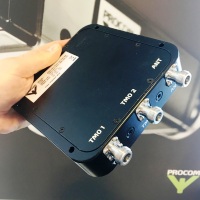
Combiners are used to combine two or more input signals with different frequencies into a single output to feed one antenna. A combining system places multiple transmit (Tx) and receive (Rx) signals onto a single common port.
Combiners are used throughout a number of industries - essentially anywhere that multiple channels are required to be used simultaneously. They are essential to any medium/large scale radio system where multiple channels are required. The use of a combiner prevents a system having to use multiple antennas, which would vastly increase costs and runs the risk of radio interference. You may also face potential restrictions from a local authority who may not permit a multi-antenna installation.
There are multiple types of antennas offered by Amphenol Procom, with them ranging in the number of channels they combine (up to 8) and the frequency range they cover (up to 2700MHz). Whilst there are mobile, simplex and compact combiners, the two primary types of combiners are:
Cavity Combiners
• Use large, high Q cavities which are generally lower loss and capable of handling higher power levels.
• The sacrifice is often size, with cavity combiners taking up lots of rack space.
• They are also more expensive compared to their hybrid counterparts.
Hybrid Combiners
• Much smaller, but generally have more signal loss due to the way they process RF signals.
• Better suited for most typical systems if signal loss is no issue or can be compensated for.
• They can operate with little to no Tx frequency separation, with cavity combiners requiring a minimum frequency spacing.
